

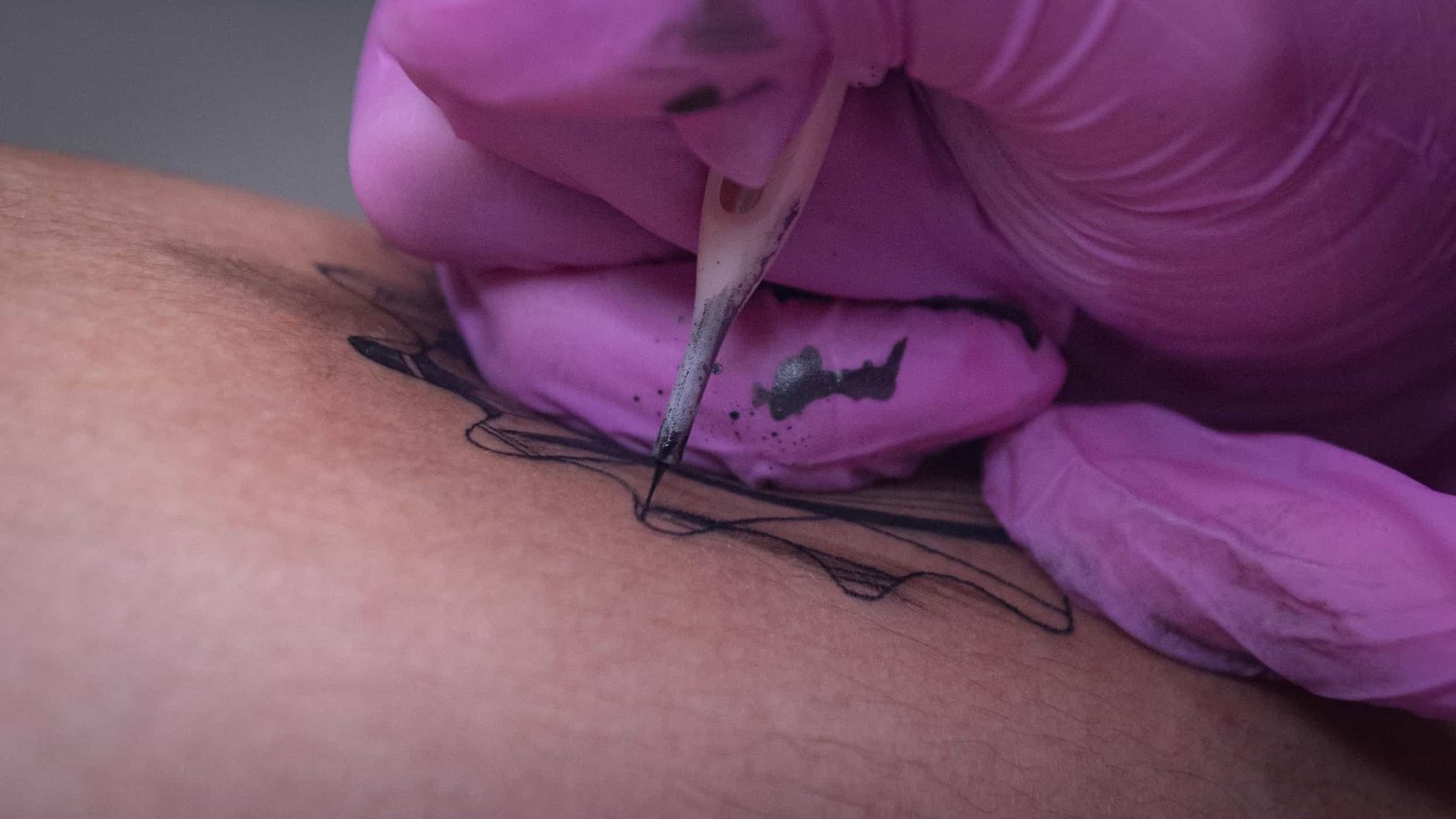
The Story Behind the Ink
The question “what does a semicolon tattoo mean?” comes up for a simple reason: the mark is tiny, quiet, and most people who wear one don’t hand you the backstory. A semicolon tattoo is punctuation worn as ink, and it stands for one thing above all – the sentence could have ended there, but the author chose to keep writing. People get one to mark survival, to grieve someone they lost, or to say “I’m still here” without saying it out loud.
In the US? Call or text 988 – the 988 Suicide & Crisis Lifeline is free, confidential, and available 24/7. Chat is available at 988lifeline.org.
Key takeaways
- A semicolon tattoo is the punctuation mark used where a writer could have stopped but chose to continue – applied to a life instead of a sentence.
- The symbol traces to Project Semicolon, started in 2013 by Amy Bleuel to honor her father, who died by suicide.
- It’s used as a mental health tattoo, a grief tribute, a suicide prevention symbol, and a private promise – sometimes all at once.
- Meaning lives in the details: a bare semicolon, one wrapped around a heart, a butterfly design, a wrist placement, a 3mm mark versus a full piece.
- Not everyone wants to explain theirs. You can acknowledge a semicolon tattoo without demanding the story behind it.
Where the semicolon tattoo came from
Project Semicolon started in 2013. Amy Bleuel founded it to honor her father, who died by suicide, and to make room for people to talk about mental health without shame. She picked the semicolon for reasons that have nothing to do with clinical language and everything to do with grammar.
In writing, a semicolon joins two independent clauses. A period would have worked. The author chose not to use one. That’s the whole idea: the sentence goes on.
Applied to a person, the mark reads as I could have stopped here. I didn’t. Project Semicolon’s own history page puts it plainly – the semicolon became a symbol for anyone who could have ended their own life but chose to keep going.
What surprises people is that this wasn’t a marketing campaign. As Project Semicolon’s tattoo history explains, Bleuel’s own semicolon tattoo helped the idea spread, but the ink spread on its own – one person showing a friend, a wrist at a time. Within a few years it moved through hospitals, high schools, military communities, and tattoo shops far outside the US, which is why you’ll see a semicolon on someone who has never heard of the organization behind it.
What a semicolon tattoo means to different people
No two semicolon tattoos carry the same file. Ask ten people and you’ll get ten answers, but most land in a few familiar buckets.
Survival. The most common reading, and the one closest to the original. Something was very bad, and the person is still here. Some pair it with a date, a hospital discharge, or the year they quit drinking.
Grief. A lot of semicolons are memorial tattoos for someone who died by suicide – a parent, a sibling, a friend, a patient. Those are often the ones with initials, a birth date, or a line of handwriting inked alongside the punctuation.
Solidarity. Therapists, nurses, crisis-line volunteers, teachers, and family members wear them too, as a way of saying I’m a safe person to talk to without a badge. Not everyone with a semicolon has been suicidal. Plenty of people get one because someone they love was.
A promise. Some people describe it as a note to their future self – a reminder for the night the reminder is needed. That’s the version that functions less like a statement and more like a promise to stay.
Recovery that isn’t about suicide. People choose a semicolon tattoo for mental health reasons that don’t fit neatly into one box: addiction recovery, an eating disorder, self-harm, a long depressive stretch, a grief that flattened a year.
That range is the point. The mark doesn’t specify. It leaves room.
Semicolon symbolism: what the details tell you
The base symbol is fixed, but the semicolon tattoo meaning shifts with design and placement. If you’re reading someone’s ink – or planning your own – here’s what the variations usually signal.
- A bare semicolon. The classic. Black, minimal, roughly the size of a typed character. It’s the most recognizable version and the least explanatory – which many people want.
- Semicolon with a heart. Usually love, self-compassion, or devotion to a specific person. Sometimes the heart is a small outline where the comma would be; sometimes the semicolon sits inside the heart. Read it as affection first, not as a clinical statement.
- Butterfly or wing shapes. Growth, change, getting out of something. The semicolon forms the body with wings on either side. It’s a hopeful design, and it’s also one of the harder ones to get right at small scale.
- Wrist placement. The most common spot, and the most visible – good for a daily reminder, less good if you’d rather not explain yourself at work. Behind the ear, the collarbone, the ribs, and the inside of a finger all hide better.
- Small versus large. A micro semicolon – 3mm or so – is subtle and heals soft. Lines that fine can blur over years, especially on hands, fingers, and feet. Bigger pieces give an artist room to add script, dates, or florals.
- Over scars. Some people place a semicolon over old self-harm scars as a reclaiming gesture. For others that placement is too loaded. Both are valid, and a good artist will talk it through with you rather than decide for you.
Semicolon tattoo ideas and design tips
You don’t need a novel of a tattoo. The strongest versions are usually the simplest. A few directions that hold up over time:
- Your own handwriting. Write a semicolon on paper, then have the artist trace it. It looks like a signature instead of a font.
- Semicolon plus a date. A year, a day, a set of initials. Keeps the meaning specific without spelling it out.
- Semicolon as a wave or heartbeat line. Good for people who want motion in the design.
- Two dots, one dash – done in color. Deep red or ocean blue reads as a deliberate choice instead of a typo.
- Semicolon inside a small botanical. Ferns, lavender, and wildflowers are common companions; each carries its own secondary meaning.
- A paired tattoo. Friends, siblings, or a parent and child each take half the mark, or the same one in different spots.
- An uninked semicolon. Plenty of people wear a semicolon necklace, ring, or a drawn-on mark for a day. No appointment required.
On the practical side:
- Look at healed work, not fresh work. Ask the shop to see photos six months out. Fine-line tattoos look perfect on day one.
- Go to an artist who does small lettering. Punctuation is unforgiving. A wobbly dot is very visible.
- Size up slightly. A tattoo that’s legible at arm’s length now will spread a little as it ages. Half a millimeter of extra weight is worth it.
- Ask about the shop minimum. Small pieces are often priced at the minimum, so it’s worth knowing before you fall in love with a 4mm design.
- Don’t copy a memorial design exactly. If someone’s semicolon honors their brother, borrow the spirit, not the layout.
Mental health tattoo etiquette: how to ask, how to respond
A semicolon is visible, which means it gets questions. Most of them are well-meant and clumsy. Here’s how to be the person who handles it well.
Ask once, and make the out easy. “If you’re up for it – what does your semicolon mean to you?” That phrasing gives them a graceful exit. Then take the answer you get: “It’s personal” is a complete sentence, and it isn’t a rejection.
Don’t touch. No reaching for a wrist. Ever.
Don’t guess out loud. “Did you try to kill yourself?” is not a conversation opener, even if you’re right. Neither is “my cousin has one of those.” Let them name what it is.
Skip the reassurance reflex. “But you seem so happy!” turns their tattoo into a debate about your impressions. So does “I could never do that.” Try “Thanks for telling me” or “That’s a hell of a thing to carry” and then let it sit.
Watch the setting. A waiting room, a checkout line, and a first session are not the same room. In a clinical setting, many therapists deliberately don’t comment on a client’s tattoos unless the client brings them up – and if you work in one, that’s the habit to keep.
Ask before you photograph. A semicolon photo on someone’s social feed is theirs to post. Yours is not.
When a symbol isn’t enough
A tattoo can hold a lot. It can’t hold everything, and it was never meant to.
Worth paying attention to: the meaning of your semicolon has quietly changed from I survived that to I’m still in it. You look at it and feel nothing, or you look at it and feel worse. Sleep is gone, everything feels flat or loud, you’ve stopped answering people, and the thoughts that used to pass through are starting to stay. If a symbol has become the only thing holding the line, that’s a signal, not a failure.
Talking to a licensed therapist is the ordinary next step, not a dramatic one. A primary care doctor can refer you. If you’re in crisis right now, call or text 988 in the US, or chat at 988lifeline.org. Outside the US, findahelpline.com lists local crisis lines.
I’ll add the obvious disclaimer: this post is informational. It’s not medical advice and it isn’t a substitute for care from a professional who knows your situation.
FAQ
Is the semicolon tattoo only for suicide survivors?
No. It started as a suicide prevention symbol, and that’s still the most common meaning, but it’s also worn by people in recovery from addiction or an eating disorder, by people who live with depression or anxiety, and by family members and clinicians who want to show they’re safe to talk to.
Which wrist do you get a semicolon tattoo on?
There’s no rule. Most people pick their non-dominant wrist because it’s easier to see and easier to heal. If you want it more private, the inside of the wrist hides better than the top, and the back of the shoulder or ribs hide completely.
Can I get a semicolon tattoo if I’m not suicidal?
Yes – people do it all the time. You might get one for someone you lost, for a hard season you got through, or because the message keep going is one you want to look at. It’s a symbol, not a credential.
What does a semicolon tattoo with a heart mean?
Usually love. Sometimes self-love, sometimes love for a specific person – a partner, a child, a friend who died. It softens the mark, so it reads more like devotion than survival. If you want to know which, ask; the person will tell you if they want to.